
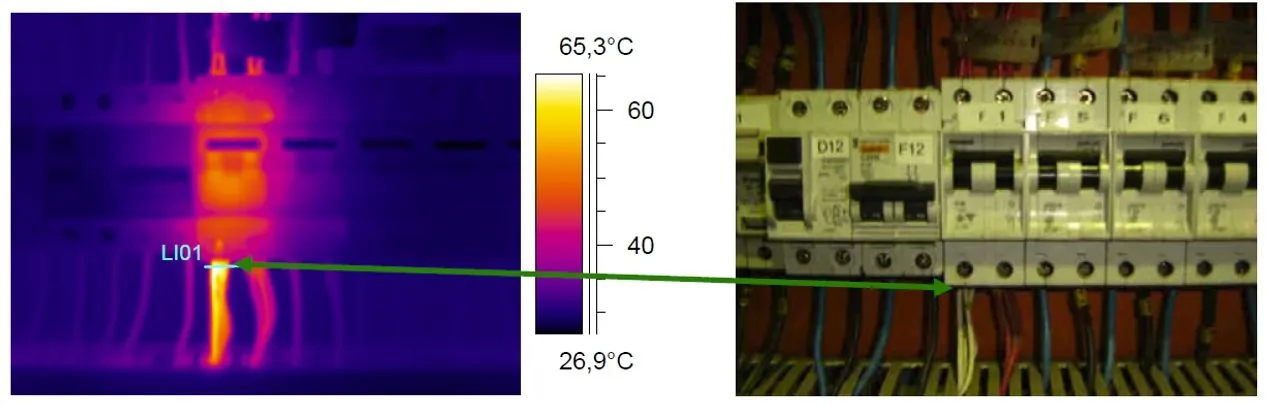
Thermography of electrical panels: what it detects and what the report must say
A thermal camera shows which connection is running too hot before it fails, without stopping the installation. Here we explain how it is measured, what can mislead the reading and what a useful report has to include.
The essentials
- Thermography
- Power analyser
Hot spots: loose or degraded connections, overloads, phase imbalance and components that are starting to fail. It is seen without opening the circuit or stopping the installation.
Only what heats up is visible, and a bad connection heats up when current flows. It is measured with the installation running and with a load that represents normal work: at low load, a defect can go unseen.
The hot spot is compared with an identical one under the same conditions, for example the same connection on another phase, and rated by the temperature difference. Severity criteria vary from one procedure to another (for example, NETA), so the report must say which one it uses.
The emissivity of the material, because shiny metals mislead, and also reflections, distance and the size of the spot. A serious report says how each was corrected.
Thermal image and photo of each point, where it is, its temperature and the difference from the reference, the probable cause, what to do and by when, and under what load it was measured.
In our low-voltage maintenance contracts, thermography comes together with a power analyser, earthing and insulation measurements, tightening of connections and preparation for the OCA inspection.
Sources
General guide. Severity criteria and minimum load depend on the procedure applied; each job's report says which.
Recent projects
Tap a photo to see the job from the inside: what was asked, how it was done and what was installed.